By THOMAS REYNOLDS
for the Montecito Journal
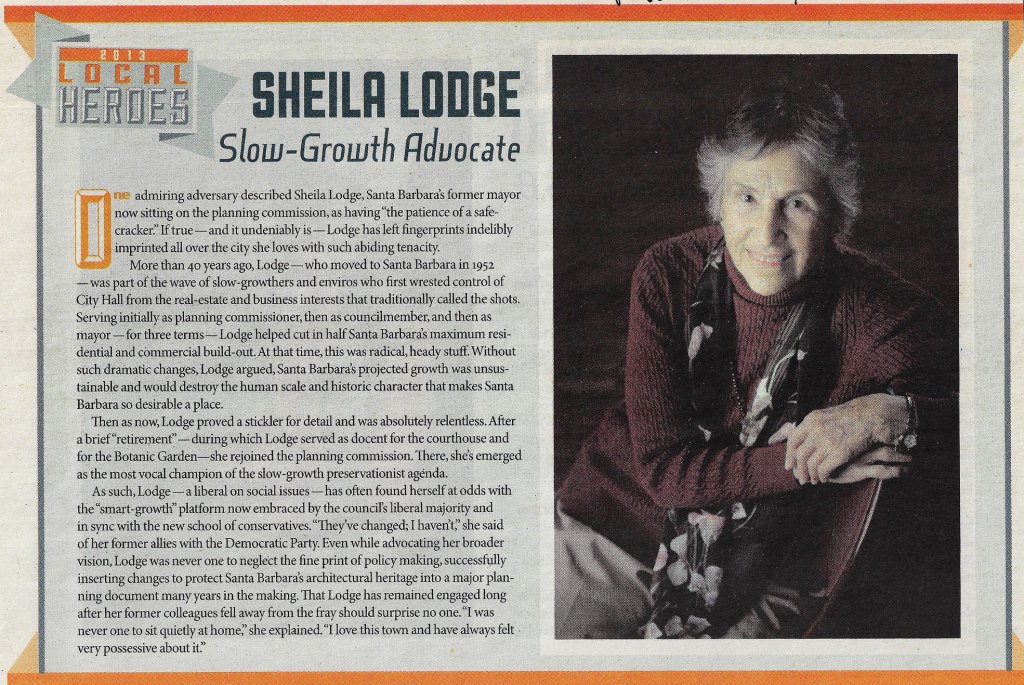
Sheila Lodge, the first woman mayor of Santa Barbara and its longest-serving, died on July 8 at age 97. She probably always will be Santa Barbara’s longest-serving mayor, since term limits now restrict her successors to two terms.
She is less known all the way over in Montecito, which is not part of Santa Barbara except Coast Village Road, annexed for its sales tax revenue.
That had some advantages during her long political career — first as planning commissioner in the 1970s, then on the city council for six years, then as mayor for 12 years. Later she unretired and went back on the Planning Commission for another 16 years — and then, after retiring to get a new hip at 95, onto the Historic Landmarks Commission until the end of her life.
By then she herself had became a historic landmark, a sometimes lonely voice that for nearly a century after modern Santa Barbara was created following the 1925 earthquake kept reminding people how Santa Barbara had become such a special place: through careful planning that strictly limited growth to only what its natural resources could accommodate, and vigorous citizen involvement that made certain city leaders kept the faith. Also: that the earthquake wasn’t as devastating as it’s remembered, but merely cleared the way for Bernard and Irene Hoffmann to begin realizing their dream of a Santa Barbara that honored its Spanish and Mexican heritage with a cohesive architecture and the nation’s first Architectural Board of Review. “It wasn’t Pearl Lodge!” she insisted.
That Montecito was not part of Santa Barbara was something she frequently mentioned in her speeches when she was mayor. Contrary to popular myth, she maintained, Santa Barbara was not, in fact, a wealthy town. It was in the bottom half of California counties in per capita income. That was because Montecito and Hope Ranch weren’t actually part of Santa Barbara — and that’s where much of the big money was, and still is.
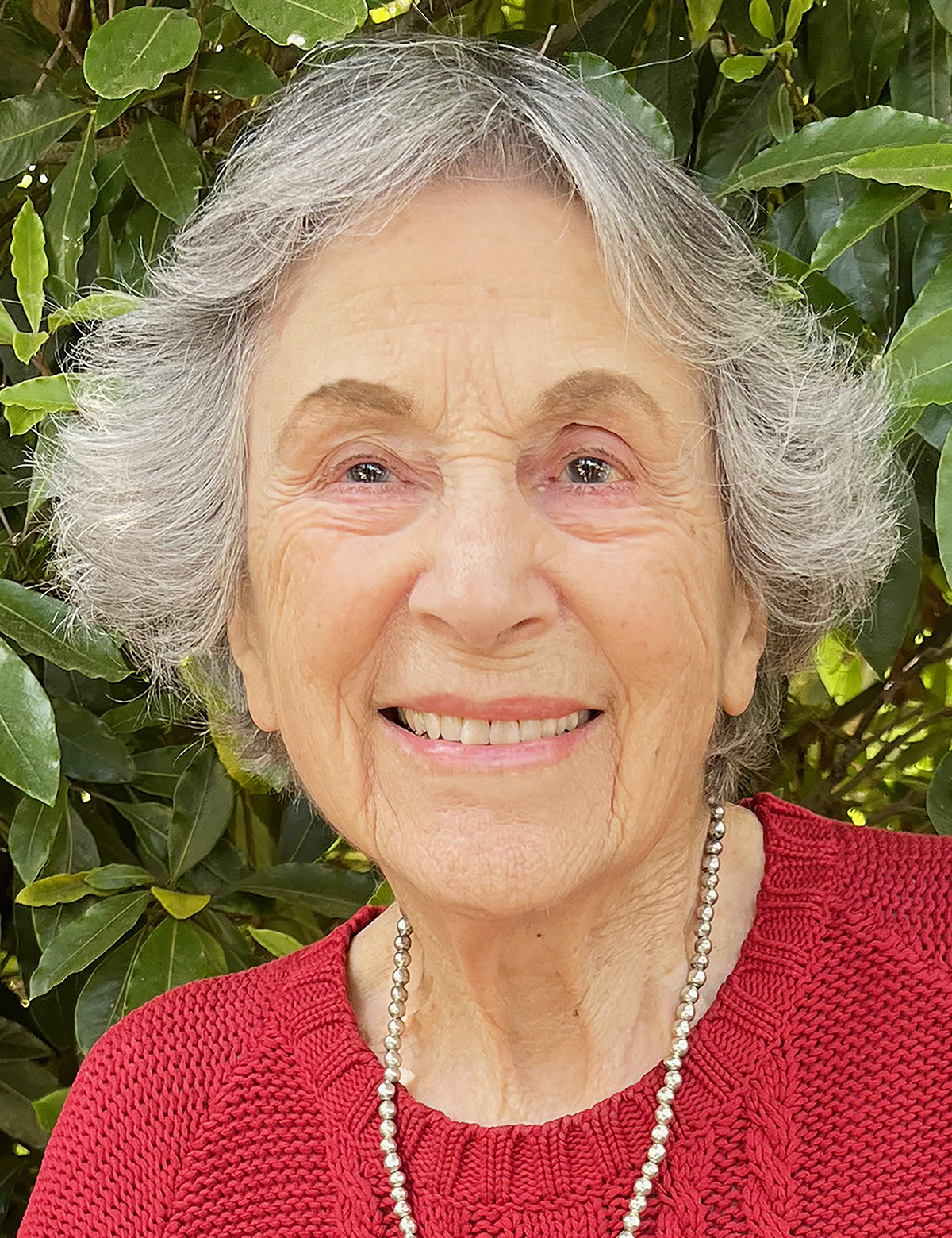
When she unretired again at 95 and went onto the Historic Landmarks Commission, she thought a new portrait was in order, even though she still looked pretty much as she had in the portrait used on the back cover of her book, Santa Barbara: An Uncommonplace American Town, locally published in 2020. Using an old photo wouldn’t be honest, she said.
Sheila Lodge died as she lived. When the pain in her new hip returned and became too much to bear, she called her doctor and told him, “I’m done here.” He ordered up the end-of-life medicine allowed under California law. She took it four days later, after all four of her daughters arrived.
The hospice nurse warned her it could take up to 18 hours to be fully effective, but that she would be peaceful and unaware. It took her almost 40 hours. She died on the morning of July 8, in the home she herself designed, atop Mission Ridge, with a view of the mountains and the shimmering blue channel surrounding the city she loved.

